Final Blog Post

Thinking back on my experience with Fall 2021 C&E, I have many mixed emotions. On one hand it has been a class style I have never been in before, and the different discussions with students offer a large range of opinions and thoughts that can be discussed throughout the day. On the other hand, C&E has proven to be a little difficult to navigate, and at times can even be misleading to many students who have joined, and express their anxieties with balancing RHC and normal courses. C&E has proven to be dedicated to the art of learning and exploring the world of culture and community. 

At the end of C&E, I am a lot more passionate about projects or other involvement than I ever could have imagined. I think in some ways I have grown and in many ways I have stayed the same throughout my time in C&E. I believe that I have found courage to speak up about systems that I do not see working, as described through our project and survey group. It has been very inspiring and enlightening to me to view the results of our study and relate to shared experiences being within the Honors college. Being able to collaborate and discuss with other groups and take feedback from others has built a lot of development for myself. I have also learned a lot of interconnectedness with classic texts that I did not have knowledge of prior, and enjoyed getting a new perspective of older texts and communities.

The Rabinowitz Honors College community has been a mostly positive experience through college thus far. I do not have a very close relationship with many of the students who are in RHC because of my later addition to the program, but do look for guidance from other RHC students and enjoy the amenities that are given to RHC students. I have also enjoyed the RHC lectures and classes because they allow for a more specialized approach to the subject and create a community with other students in RHC that can help outside of the classroom and understand some questions other students may have. 

A text that stuck with me was “Not All Dead White Men: Classics and Misogyny in the Digital Age,” by Donna Zuckerberg. This stood out to me because it was one of the few texts I felt that took the ancient readings and contextualized them into today’s conversations, and addressed modern day issues in relation to older texts, rather than trying to make older texts modern or make sense for today’s age. I felt that this could relate to a larger audience because it was related so much to our modern world and modern issues that are important to discuss in education and places of learning. Zuckerberg states, “Where the classical tradition thrives, the greatest enthusiasm for the ancient world is usually found among social elites,” (Zuckerberg 23). I think this was not only more attention grabbing because it was modern, but it also provided an analysis of the ancient world and the issues that come along with classic texts. I think this also showed who the ancient texts were important to and stressed that not all important texts have to be ancient, nor do they create a smarter person.

Zuckerberg, Donna. Not All Dead White Men: Classics and Misogyny in the Digital Age. S.n., 2019.
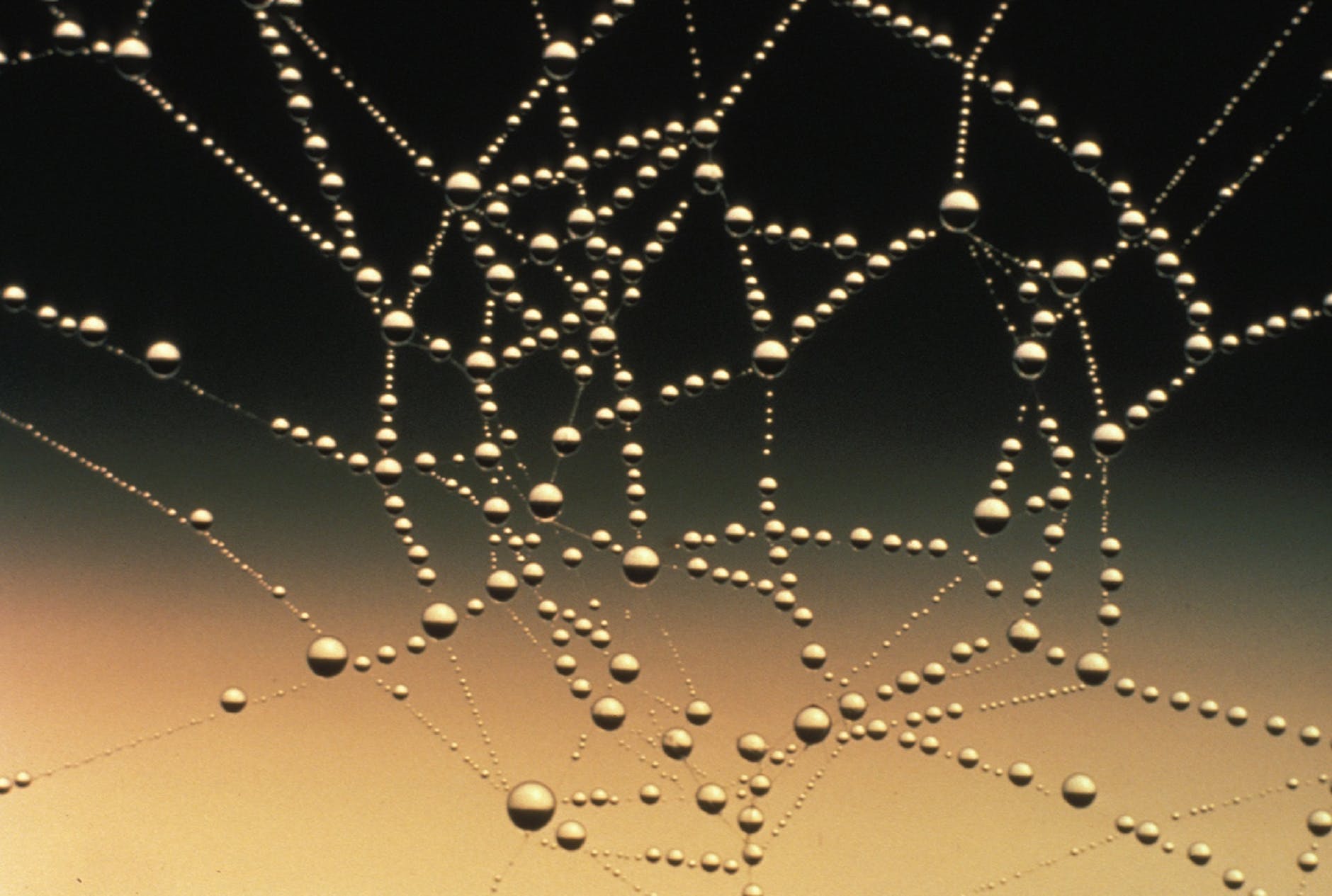
Photo by Pixabay on Pexels.com

The spiderweb presents creation, growth, and connection.

Photo by Maria Orlova on Pexels.com

The staircase represents focusing on the present while appreciating and learning from the past.

Questions 11/4

I am under the impression that Christine de Pizan in a feminist, but her exclusion of other women is very contradictory to her other statements.

What do all the women who sit at the triangular table have in common? How do they differ? Who is excluded from this table and what voices are not being heard?

Questions 11/2

How do female writers rewrite a narrative given to them when present day students look at a women’s role in the past?

How were some of the topics we discussed contradictory in the writing we heard, and how does it contradict itself?

Questions 10/28

The Round Table is a group of people who are all seen as equals, and all represent the tremendous sacrifices that they have made to be there. What does this sacrifice to be with another community say about our earlier conversations about community?

It is shown in Middle Age texts that women seem to be much more influential and outspoken than they are usually depicted by our impression of a woman’s role in historical contexts. Why is this?

Questions 10/26

If these stories were performed verbally and not everyone had access to a written version, how did the story change because of this? How true is the translation today to its original version?

How did Marie’s stories change the narrative of famous stories from the time and representation of female writers?

Blog Post 10/04

Families within themselves are communities, and the people you associate with. Families tend to do things together, such as meals or go to events together, but this is not always the case. They can disagree with each other, build each other up, become divided, all things that communities can also do. Families definitely have in-group and out-group bias. A child might be closer to one parent and favor their side, siblings might choose each other rather than parents, which all create biases within families, but can still stay as a unit. Empathy plays a huge role within families. If someone in your family makes a mistake or has something bad happen to them, most family members show them support and unconditional love. That being said this is not true for all families who are blood related, many people tend to pick the people they consider their family so they can have unconditional love and support.

Communities in general are more focused on the group rather than the individual, but I believe that families have the capacity to do both. A small example is chores, each person can take a task to help the household be clean as a unit, for the better of the family. Some people start working at a young age to help support their family financially, all of which is not based on the individual. In addition to this families can also stress the importance of the individual, such as going to watch their sports games or helping on an essay that they have to turn in, this is all for the individual and their own accomplishments. What is so unique about families is that the individuals make up the community, and the dynamic would be very different if one person were missing. Although these factors are not true for all family units, this can be accurate towards many, because each family is different, and embraces all of the members that make up that community.

Definition Project 9/21

I would like to explore empathy and biases within evolution for my definition project because it is very interesting to me that animals process emotions very similarly to humans, even though we think of ourselves as the most sophisticated animals. The reason I would like to explore this is because while we were discussing in groups and outgroups, it was interesting that some people completely stray from our human nature to have empathy for another person, and how this connects to internal biases. This was discussed within the first C&E lecture that we attended. It was interesting that people can have implicit biases when it is within our nature to empathize with other human beings, and finding where these biases come from. I was also interested in this because just like empathy is implicit, so are biases, and it is useful to track our biases and see how they affect the world around us or others around us, and how we can change some of these biases. 

We first discussed this topic in the article, “The Antiquity of Empathy,” by Frans B. M. de Waal, which discusses studies of empathy in animals and how they might differ or be similar to the emotional responses of humans, and how we have evolved. The author goes on to say, “That empathy is rooted in bodily connections between individuals is reflected in pain contagion in mice (19) and yawn contagion in apes and humans (20),” (deWaal) but also discusses how humans have evolved to show empathy mostly to ingroups. This interests me because I am curious to know where this bias comes from, and where along the line of evolution that this came to be. Both empathy and biases are within human nature, but it is interesting to see where things like race were created as a social construct and what impact that has on internal biases and empathy. 

deWaal, Frans B. M. “The Antiquity of Empathy.” Science Mag, 18 May 2012, http://www.sciencemag.org.

Blog Post 9/14

Every community, no matter the size, faces struggles when it comes to coming together as well as consistency. It is within human nature to be deviant at times, or go against what may have been said to lead us. However, it is also human nature to want order and flow. Within these past few readings, we have learned that there are many difficulties when it comes to trying to create an environment or community that has rules, and people who will follow these rules. Communities can uplift people and inspire hope and growth, but also can place boundaries that restrict attitudes or actions.

Within the first prophetic text we read about the Hebrew Prophets, it is clear that rules were put in place to restrict first, which will then lead to order and peace second. These boundaries were put in place to create a community of love and commonality, but create complexities when there are harsh punishments for stepping out of line in even the smallest ways. What has become clear to me within several readings of religion is that rules are more important than individuality, which I have witness within my experience growing up in the Catholic Church, as well as my experience within other communities, not just within religion.

Despite these rules, community also allows people to find solace in one another. People will gravitate to those who share common thoughts or feelings, so communities create a place of peace and union for many people. It has been through many communities that people have been able to rise up and break traditional boundaries set upon them, which contradicts earlier notions of assimilation within communities. They allow us to come together and support one another, which the Book of Ruth exhibits, “And the women said to Naomi, ‘Blessed be the lord who has not withheld a redeemer from you today… for he is born of your daughter-in-law, who loves you and is better to you than seven sons,” (Ruth 4.13-4.22). Ruth loved the community she created with her mother-in-law, and showed a prime example of what it means to come together in times of need, which community does to greatly.